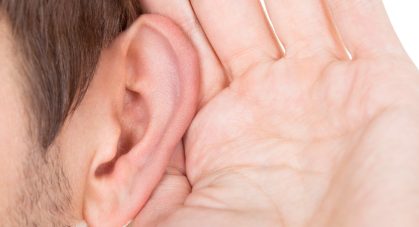





Many service personnel leave the Forces with a hearing test that looks ‘normal’, yet struggle to follow speech in noisy environments, live with tinnitus, or feel overwhelmed by everyday sounds.
Research increasingly shows why: the earliest military noise damage may be invisible on routine audiograms.
A Uniquely Loud Workplace
Military settings expose personnel to a combination of continuous noise (such as vehicle engines, aircraft, and ship machinery) and sudden, high-impact sounds (including gunfire, grenades, and mortars).
Impulse noise is especially damaging because it delivers an intense pressure wave in a fraction of a second. Even with brief exposure, the peak level can be high enough to injure the inner ear immediately, and repeated exposure compounds the harm.
Although hearing protection is available, it is not always used consistently. In training, equipment may be poorly fitted, not replaced often enough, or removed to hear instructions. In operational environments, personnel may avoid using protection if it seems to reduce situational awareness or radio communication.
As a result, preventable noise exposure can become routine – often long before symptoms are obvious.
Why The Audiogram Can Look Fine (and Still be Misleading)
When most people think about hearing tests, they picture a pure-tone audiogram: you press a button when you hear beeps at different pitches. It is a useful tool, but it mainly captures whether you can detect quiet tones in a silent booth.
Many service leavers report “I can hear, but I can’t understand”, they are describing a different problem: following speech in busy environments, localising sound, or coping with competing signals on comms.
That gap between symptoms and test results is one reason clinicians and researchers have focused on “hidden hearing loss”.
The idea is not that hearing is unaffected; rather, the damage may occur in places an audiogram doesn’t capture well. Instead of (or before) obvious loss of the sound-sensing hair cells, noise can disrupt the synapses that connect inner hair cells to the auditory nerve – sometimes called cochlear synaptopathy.
As a result, you may still pass a standard hearing test but struggle when sounds become more complex.
The Lived Experience: Not Just ‘a Bit of Deafness’
For many, tinnitus is the first noticeable symptom – ringing, buzzing, or hissing with no external source.
Research involving service personnel and veterans shows that tinnitus can have real, day-to-day consequences, including:
- Reduced concentration
- Sleep disruption
- Difficulties at work
These effects can be significant, both during service and in civilian life.
What makes this particularly frustrating is the label “normal hearing.” If the audiogram is within expected limits, people may feel they are not believed – or they may doubt themselves – despite real difficulty in pubs, open-plan offices, or family gatherings.
Some also develop sound sensitivity (hyperacusis), where everyday noise feels harsh or intrusive. The combined effect can lead to avoidance of social situations and significant fatigue from constant listening effort.
Detecting Early Damage: Beyond The ‘Beep Test’
Clinical understanding is evolving. When someone reports hearing difficulties, assessment should include more than pure tone tests.
Additional approaches include:
- Speech-in-noise testing, which can capture the real-world complaint directly.
- Extended high-frequency testing (above 8kHz) which may help identify early cochlear stress.
Researchers are also investigating objective markers of synaptic injury, but these are not yet routine in everyday healthcare.
For the military, this matters because it reframes prevention. Effective hearing protection is not just about issuing earplugs. It also involves:
- Education that makes risks feel immediate
- Practical training on insertion and fit
- Equipment that supports communication (for example, level-dependent or tactical systems that attenuate blasts but allow speech)
- Leadership that treats hearing protection as normal, not optional.
Regular surveillance that includes symptom reporting and functional testing can also catch problems earlier.
If You’re Struggling, It Still Matters
Military noise injury is not always dramatic or immediately obvious. It can begin as subtle distortion, a constant internal tone, or the sense that everyone mumbles as soon as background noise appears.
The emerging concept of hidden hearing loss helps explain why some people feel impaired even when their standard hearing test looks reassuring.
If you are serving, the message is simple: protect your hearing every time you can, and report symptoms early, even if they seem minor. If you are a veteran and you are struggling in noisy places, ask for an assessment that includes speech-in-noise measures, not just pure tones, and discuss tinnitus or sound sensitivity openly.
Hearing damage may be invisible, but its effects on work, relationships and quality of life are very real.
We Can Help
At Oliver and Co Solicitors, we specialise in military noise induced hearing loss claims, including tinnitus. We understand the process of dealing with the Ministry of Defence and recognise that even if tinnitus is an invisible injury, its effects are very real.
If you have served in the Armed Forces and are struggling with hearing loss or tinnitus, our expert Industrial Disease Solicitors can advise whether you can claim for compensation. Call us today on 01244 312306 or email law@oliverandco.co.uk for a free, no-obligation chat to see how we can help you. All of our work is carried out on a no win, no fee basis. We are here to help you.