




A grieving son reached out to us following the sad passing of his father, Mr B, at just 64 years old. He had died due to the asbestos-related cancer, mesothelioma.
Unfortunately, as Mr B had passed away before we were instructed, we were unable to speak to him directly and take details of his employment and exposure to asbestos. Instead, we spoke to family members, and it was revealed that Mr B was employed by RWE Npower and likely encountered asbestos dust during his tenure as a Non-Destructive Testing manager in the late 1990s.
Company did not appear on HMRC employment schedule
As part of the process in mesothelioma claims, we acquired Mr. B’s work history from HMRC. However, the records revealed that Mr. B had been self-employed during the suspected period of exposure to asbestos when he worked at the power stations. This presented a significant challenge, as self-employed individuals cannot legally sue themselves. Consequently, details regarding Mr. B’s potential history of asbestos dust exposure remained ambiguous.
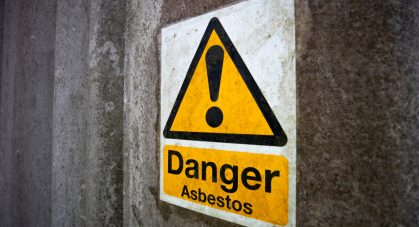
With the assistance of the family, we had the opportunity to interview several witnesses who had worked alongside Mr. B at both the Didcot and Tilbury power stations. One witness attested that most power stations featured large boilers, resembling cathedrals in size, with hundreds of workers present. Although the use of fresh asbestos lagging materials had been prohibited by the power station owners in the late 1960s, the extensive legacy of asbestos products and dust persisted at the sites well into the mid to late 1990s.To address this issue, procedures were implemented by the Central Electricity Generating Board (CEGB) and its successors to attempt to safely remove large sections of asbestos lagging identified at the power station sites. Warning signs were erected around the affected areas during such operations, and tenting facilities were established in larger areas to contain the spread of asbestos dust into the general working environment.
However, the witness testimony we gathered confirmed that the deceased’s duties often involved visiting areas of the power station that had remained untouched for many years. In these areas, substantial dust accumulation was common, and the deceased and his colleagues would have to go through these areas to reach other parts of the power station. They frequently navigated areas where the dust levels were so high that they reached knee-deep, with some of this dust believed to be asbestos dust from deteriorating lagged pipes above, mixing with other particulates such as coal dust.
The deceased and his colleagues were tasked with inspecting welds, pipes, and structures in these environments, described as extremely dusty workplaces.
Moreover, the witness recalled instances where workers at the power station stripped small sections of asbestos lagging to access areas of pipework in need of repair. Additionally, workers were observed dry sweeping on the gantries and lower floors, causing accumulated dust and debris to rise into the atmosphere, inadvertently inhaled by all workers in the vicinity, including the deceased.
Witness evidence crucial to proving blame
Since the deceased was self-employed, the inability to sue an employer in this case required us to gather additional evidence to demonstrate that the successor to the CEGB had authority over the deceased’s work at the power stations.
Fortunately, this requirement was fulfilled through testimony from a witness who recalled receiving instructions and guidance from RWE Npower-employed managers regarding the location and execution of their work at the power stations. At each power station, there was consistently an RWE-employed NDT manager assigned, to whom both the deceased and the witness reported directly while working in these areas. We contended that this arrangement indicated RWE’s sufficient level of control over the deceased’s work.
This crucial witness testimony played a pivotal role in securing mesothelioma compensation for the family, resulting in the settlement of the claim shortly before court proceedings were to commence, for a substantial sum in the high tens of thousands of pounds.
If you need help pursuing a mesothelioma claim or believe you have a valid claim for another asbestos-related disease, please contact us today on 01244 312306. Alternatively, visit our Contact Us page, fill out the form, and we will get in touch with you.