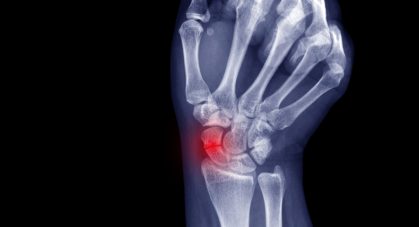





Our client was on a night out with friends when he played on a punch bag machine, which records high scores based on the strength of the punch. Our client punched the bag a couple of times before experiencing pain in his dominant right hand. The pain was so severe that he could not continue with the game.
Approximately 2 days later, our client noticed that his right hand was becoming increasingly painful and swollen. Our client was very busy with his studies and work, and he hoped that the pain would settle. However, his symptoms continued, and he therefore attended the GP at his University medical centre 4 weeks later. After a brief examination, the GP diagnosed a sprain and prescribed anti-inflammatory medication.
Our client continued to suffer with severe pain and restrictions, and he was struggling to even type or grip a pen. Approximately 6 weeks after the GP consultation, our client sought further advice from a nurse at the University medical centre, who arranged for our client to have an x-ray the following day.
Our client had the x-ray and was diagnosed with an un-united fracture on the waist of his right scaphoid bone. Our client was fitted with a cast to his elbow and later seen in the fracture clinic at the hospital.
A CT scan was arranged and following this, our client was advised that he needed bone grafting surgery with screw fixation. The surgery went ahead, and our client made a good recovery, although he continued to suffer with some pain and restrictions, particularly in the cold or with heavy lifting. Our expert was also of the view that our client requires further surgery due to the positioning of the screw.
We alleged that the GP whom our client saw 4 weeks after the injury should have referred our client for an x-ray or to the fracture clinic to investigate the potential for a scaphoid fracture. We obtained supportive expert evidence from independent GP and orthopaedic experts. The defendant denied liability, as they argued that the mechanism of injury from a punch bag machine was not a known risk for scaphoid fractures and that our client would always have required surgery as he did not seek medical advice for 4 weeks.
Our experts remained supportive of our client’s case despite the defendant’s comments, and we were able to provide articles to the defendant regarding the risk of scaphoid fractures arising from punch bag machines. We were in the process of commencing court proceedings when the defendant indicated that they wished to enter into settlement negotiations following receipt of our court documents. Following negotiations, our client recovered £37,000 in compensation.
How can we help you?
Every year, we help lots of clients win the compensation they deserve. This case study is an example of how we have helped clients claim compensation for missed or delayed diagnosis of a scaphoid fracture. Please be aware that the compensation amounts depend on the client’s individual situation and experiences. To see how much your claim could be worth please contact us directly.